
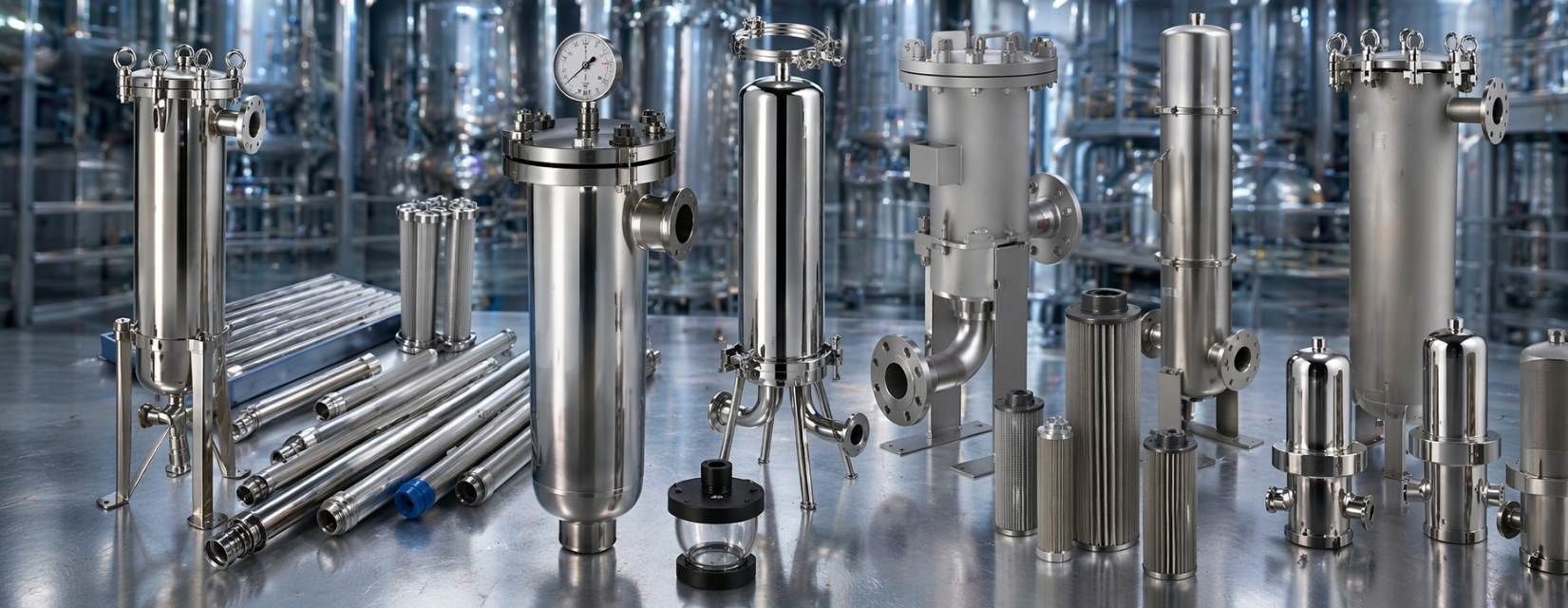
What is Process Filtration?
Process filtration refers to filtration applications that enable the controlled separation of suspended solid particles, gel formations, micro-contaminants, and other contaminants that may negatively affect process quality from liquid and gas streams used in industrial production lines.
These systems operate based on pressure filtration, depth filtration, surface filtration, and membrane filtration principles to ensure process continuity, standardize product quality, and protect equipment components.
Depending on fluid properties, process filtration can be implemented using various equipment solutions such as cartridge filters, bag filter systems, automatic backwash filters, membrane units, and modular filtration stations.
A properly designed process filtration system optimizes pressure loss, reduces energy consumption, and minimizes the risk of unplanned downtime in production lines.
Application Areas
Chemical and petrochemical production processes
Filtration is applied to purify liquid chemicals used in reaction, mixing, and transfer lines and to protect process equipment.
Food and beverage production lines
The removal of particles and micro-contaminants from fluids such as syrups, oils, dairy derivatives, and process water is critical for product quality.
Pharmaceutical and biotechnology facilities
In sterile production environments, high-purity fluid control is ensured through microfiltration and membrane filtration systems.
Water treatment and process water management
Particle filtration in process water and recycling lines used in industrial facilities increases system efficiency.
Energy production and cooling systems
Particle control in turbine cooling circuits and closed-loop water systems is critical for equipment reliability.
Metal processing and surface treatment lines
Filtration of cutting fluids, emulsions, and coating baths ensures surface quality and production stability.
Key Considerations for Selecting the Right Process Filter
Filtration precision and particle size distribution analysis
The filtration grade should be determined based on the particle size within the process fluid to maintain system performance.
Fluid viscosity and temperature conditions
For high-viscosity or high-temperature fluids, the filter media and housing material must have appropriate technical properties.
Flow capacity and pressure drop management
Selecting a filter element that is not suitable for the system flow rate may lead to performance loss in the production line.
Chemical resistance and material compatibility
In aggressive chemical environments, stainless steel housing or specially coated filter solutions should be preferred.
Cleaning and maintenance methods
Automatic backwash or replaceable cartridge systems help optimize operating costs.
System integration and installation compatibility
The compatibility of filtration equipment with the existing process line is critical in terms of sealing and operational safety.
Process Filtration System Maintenance and Optimization
Maintaining process filtration systems at peak efficiency is essential for production continuity and product quality consistency. Filter elements in process filtration applications should be inspected and replaced based on differential pressure readings, flow rate changes, and manufacturer-recommended service intervals. Unlike engine filters, process filtration elements often operate in aggressive chemical or high-temperature environments, making material compatibility a critical factor in maintenance planning.
Automatic backwash filters and self-cleaning cartridge systems significantly reduce manual maintenance requirements and minimize production downtime. Regular monitoring of filtration performance — including particle counts, pressure drop across the filter, and flow rate stability — allows maintenance teams to identify potential issues before they impact production output or product quality.
Why Process Filtration Matters for Industrial Productivity
In modern industrial production, process filtration is not simply a protective measure — it is a direct contributor to product quality, regulatory compliance, and operational efficiency. In pharmaceutical and food production environments, process filtration systems must meet strict hygiene and purity standards, with filter selection governed by GMP and food safety regulations.
In chemical and petrochemical processes, effective process filtration protects downstream equipment from contamination-related damage, reducing unplanned maintenance costs and extending the service life of pumps, heat exchangers, and valves. Kaya Group’s technical team provides expert guidance on process filtration system selection, sizing, and maintenance planning tailored to your specific production environment and industry requirements.
Our Solution Partners
We provide reliable air filtration solutions tailored to different operating conditions by collaborating with manufacturers that meet global quality standards in industrial filtration.









You can visit our online sales platform to explore process filtration products suitable for your equipment and view stock availability.
Stay Informed: Process Filtration Insights
Process filtration technology continues to evolve with advances in membrane materials, automation, and system monitoring. Visit our blog for the latest insights on process filtration selection, maintenance best practices, and industry-specific filtration solutions for chemical, food, pharmaceutical, and industrial applications.
Contact Information
Ostim, 1142. Sk. No:1/1, 06374
Ostim OSB – Yenimahalle / Ankara