
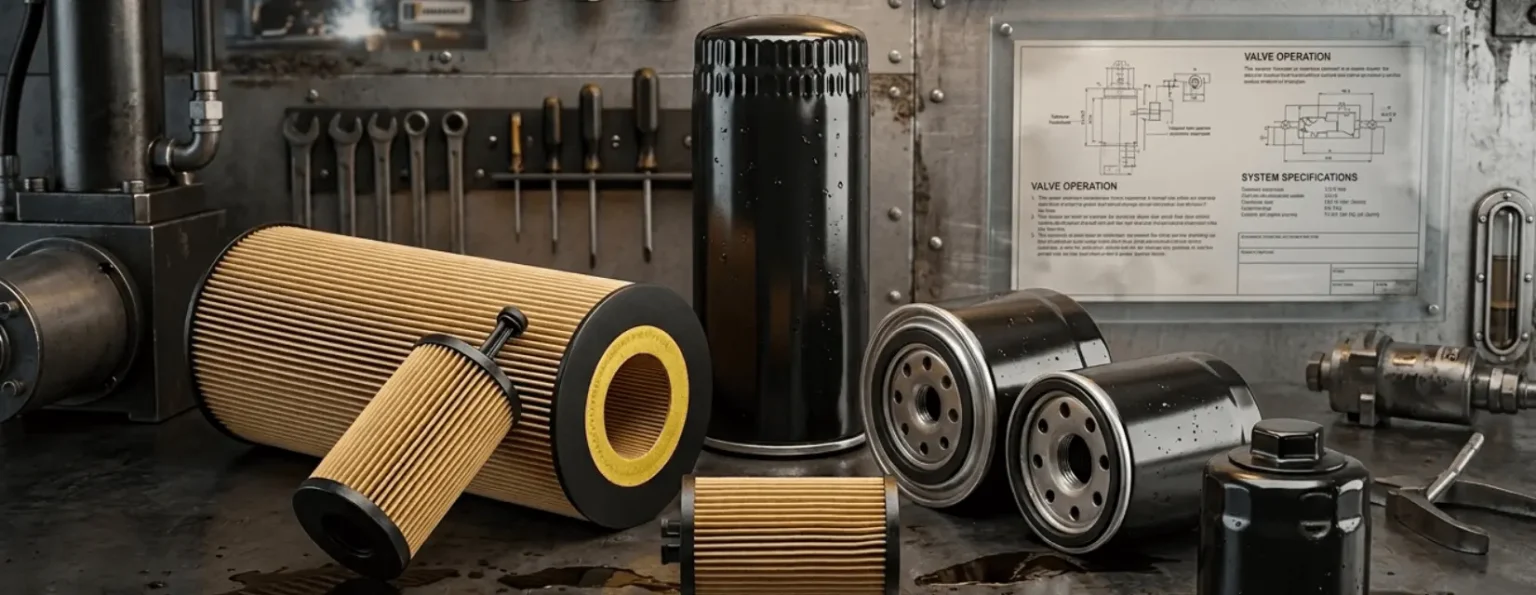
What Are Oil Filters?
Oil filters are filtration components used in engine lubrication systems, hydraulic circuits, and closed-loop industrial oil circulation systems. They separate abrasive solid particles (metal shavings, carbon deposits, dust, oxidation by-products, and resinous sludge) from the oil, preserving its chemical and physical properties.
Through the filtration process, continuity of the oil film layer is maintained, tribological surface wear is minimized, and friction losses in bearing and gear systems are reduced. As a result, thermal stability, mechanical efficiency, and maintenance intervals of the equipment are optimized.
Modern oil filters are designed using cellulose-synthetic composite filter media, multi-layer depth filtration structures, and controlled differential pressure tolerance to ensure stable filtration performance under high flow rates and varying viscosity conditions.
Application Areas
Heavy-duty and commercial vehicle engines
Maintains oil cleanliness in diesel and gasoline engines operating under high loads for extended periods, reducing friction-related wear and extending engine life.
Construction machinery and mobile equipment
Supports system performance continuity by maintaining oil viscosity stability in dusty and high-vibration environments for equipment such as excavators, dozers, and loaders.
Generators and stationary power systems
Minimizes the risk of unplanned downtime by filtering metal particles and combustion residues in continuously operating generator engines.
Agricultural machinery and equipment
Supports efficient operation of lubrication systems under varying load and environmental conditions in tractors, harvesters, and irrigation systems.
Marine and marine engine applications
Reduces corrosion and wear risks by preserving the chemical structure of oil in marine engines exposed to high humidity and saline environments.
Mining and heavy field operations
Protects critical engine components by ensuring oil cleanliness in equipment operating under high particle load, impact, and continuous high-temperature conditions.
Key Considerations for Selecting the Right Oil Filter
Nominal filtration rating (μm rating)
Filtration should be selected at a micron level appropriate to system tolerances and lubrication clearances.
Flow capacity and differential pressure resistance
The filter’s maximum flow capacity and allowable ΔP value must match system design requirements.
Dirt holding capacity
Filters with high contaminant holding capacity should be preferred for longer service intervals and stable performance.
By-pass valve opening pressure
A properly calibrated valve structure is essential to prevent oil flow interruption during cold starts or filter clogging.
Filter media structure and beta ratio (β ratio)
For high filtration efficiency, multi-layer synthetic or micro-glass fiber media should be preferred.
Sealing elements and housing durability
Elastomer seals and housing strength are critical parameters against high temperature, vibration, and pressure fluctuations.
Oil Filter Maintenance and Replacement
Regular oil filter replacement is one of the most critical maintenance tasks for protecting engine health and extending equipment service life. A clogged or degraded oil filter fails to remove contaminants from the engine oil, leading to accelerated wear on pistons, bearings, and other moving components. In severe cases, a blocked oil filter can cause oil pressure drop and result in catastrophic engine failure.
Replacement intervals should follow manufacturer recommendations and be adjusted based on operating conditions. In dusty environments, high-load applications, or when using lower-quality oil, more frequent oil filter changes are necessary. Always replace the oil filter simultaneously with the engine oil to ensure maximum protection for engine components.
Our Solution Partners
We provide reliable air filtration solutions tailored to different operating conditions by collaborating with manufacturers that meet global quality standards in industrial filtration.









You can visit our online sales platform to explore oil filtration products suitable for your equipment and view stock availability.
Stay Informed: Oil Filtration Insights
Engine oil cleanliness directly impacts performance, fuel efficiency, and engine longevity. Visit our blog for expert guidance on oil filter selection, replacement intervals, and oil analysis best practices for diesel engines, construction equipment, and industrial machinery.
Contact Information
Ostim, 1142. Sk. No:1/1, 06374
Ostim OSB – Yenimahalle / Ankara