
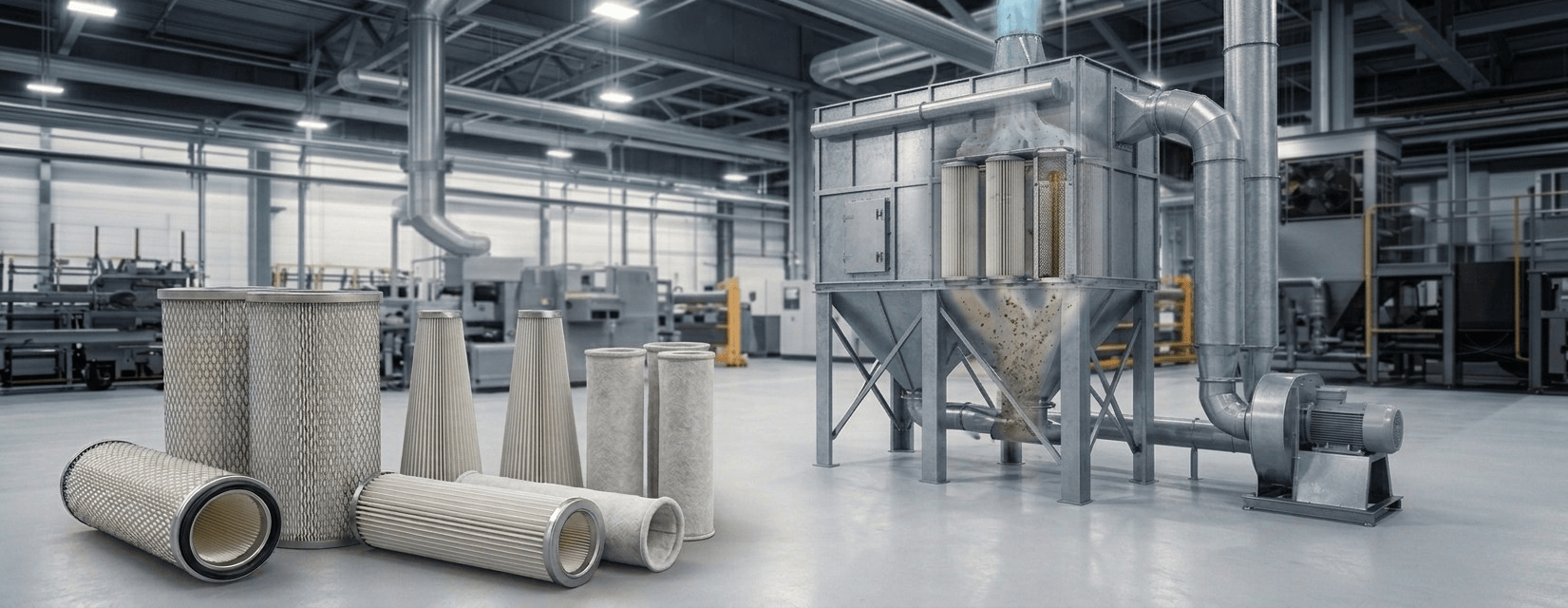
What Are Industrial Dust Collection Filters?
Industrial dust collection filters are filtration components designed to separate fine particles, process dust, metal shavings, and mineral and chemical-based airborne contaminants generated during production processes from ambient air.
These filters operate in conjunction with cartridge filter systems, baghouse units, cyclone pre-separators, and centralized dust extraction systems to improve air quality in production areas, reduce equipment wear, and support compliance with occupational safety standards.
Filter elements used in these systems, which are exposed to high airflow rates, are manufactured from specialized filtration media to ensure low pressure drop, high dust holding capacity, and long service life.
Application Areas
Metal processing and machining facilities
Ensures controlled filtration of metal particles generated in CNC machining centers, grinding, and welding operations.
Cement, ceramic, and mineral production plants
Helps protect process equipment and reduce environmental emissions in production lines with high particle loads.
Wood processing and furniture production lines
Removes chips and fine fiber dust generated during cutting, milling, and sanding operations from the environment.
Chemical and pharmaceutical production facilities
Supports production safety and product quality by providing air filtration in processes where powdered raw materials are handled.
Food and flour production facilities
Reduces explosion risk by filtering airborne combustible dust such as flour, starch, and similar particles.
Mining and crushing-screening operations
Improves operational efficiency by filtering high dust loads generated during rock and mineral processing.
Key Considerations for Selecting the Right Filter
Particle size and dust load analysis
Filter media selection should be based on the micron-level distribution of particles within the system.
Airflow rate and filtration surface area
Insufficient filtration area may lead to increased pressure drop and higher energy consumption.
Filter media type
Polyester, cellulose, nano-fiber coated, or PTFE membrane filters should be selected according to application requirements.
Cleaning system compatibility
Choosing filters compatible with pulse-jet or vibration cleaning systems extends service life.
Operating temperature and chemical resistance
In environments with high temperatures or aggressive gases, specially coated and high-temperature-resistant filters should be used.
System installation dimensions and sealing
Proper fit of the filter within the housing prevents air leakage and directly affects filtration efficiency.
The Importance of Dust Control in Industrial Facilities
Airborne dust and fine particles generated during industrial production processes pose serious risks to both worker health and equipment performance. Effective dust collection filtration reduces respiratory hazards, improves workplace air quality, and ensures compliance with occupational health and safety regulations. In facilities operating under strict environmental standards, high-efficiency dust collection filters are not optional — they are a legal and operational necessity.
Uncontrolled dust accumulation also accelerates wear on machinery, clogs ventilation systems, and increases the risk of fire and explosion in environments handling combustible particles such as wood dust, flour, and chemical powders. Investing in the right dust collection filters protects both your workforce and your production equipment.
Dust Collection Filter Maintenance and Replacement
Regular maintenance of dust collection filters is essential for sustaining system efficiency and preventing unplanned downtime. A clogged filter increases pressure drop across the system, forcing fan motors to work harder and consuming more energy. In pulse-jet cleaning systems, regular filter surface regeneration significantly extends filter service life and reduces replacement frequency.
Replacement intervals should be determined based on dust load, operating hours, and differential pressure readings rather than fixed schedules. Monitoring pressure differential is the most reliable indicator of filter saturation. Kaya Group’s technical team can assist in developing a maintenance plan tailored to your facility’s specific dust collection requirements.
Our Solution Partners
We provide reliable industrial dust collection filtration solutions tailored to different operating conditions by collaborating with manufacturers that meet global quality standards in industrial filtration.









You can visit our online sales platform to explore industrial dust collection filtration products suitable for your equipment and view stock availability.
Stay Informed: Dust Collection Filtration Insights
Effective dust management is critical for both workplace safety and production efficiency. Visit our blog for practical guidance on dust collection filter selection, maintenance schedules, and the latest developments in industrial air filtration technology.
Contact Information
Ostim, 1142. Sk. No:1/1, 06374
Ostim OSB – Yenimahalle / Ankara