
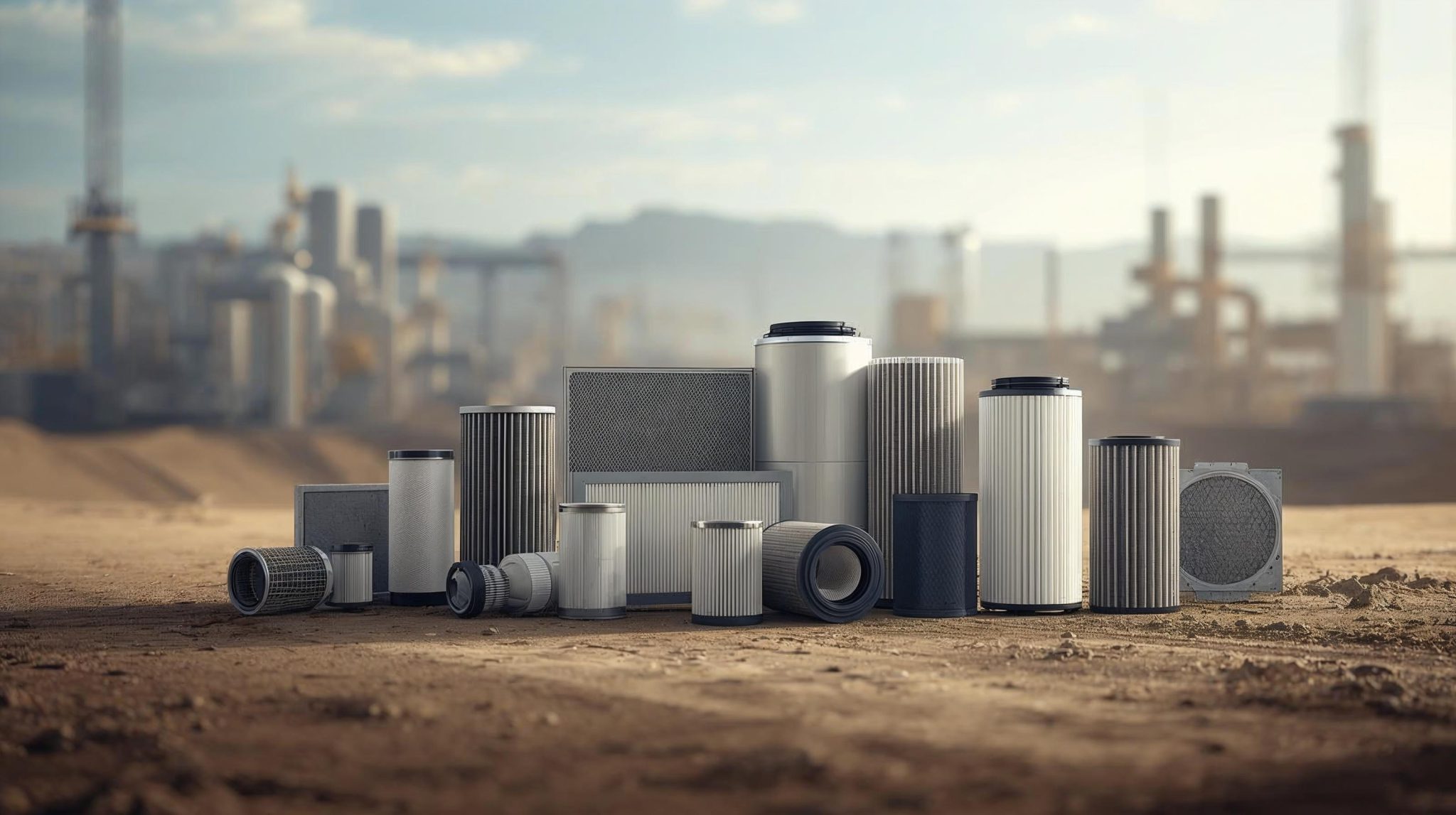
What Are Air Filters?
Air filters are high-efficiency filtration elements that ensure clean air enters the system by capturing dust, sand, soot, and micron-level harmful particles from the air drawn into the combustion chamber or intake line in construction machinery, heavy-duty vehicle engines, generators, compressors, and various engine-driven systems.
The filter media typically consists of cellulose-based, synthetic fiber, or nanofiber-layered structures and is designed to provide high dust holding capacity, low pressure drop, and long service life depending on operating conditions. Choosing the right air filters directly contributes to maintaining engine performance, optimizing fuel consumption, and minimizing wear in engine components.
Application Areas
Construction and heavy equipment (excavators, loaders, dozers, etc.) Ensures filtration of particles entering the engine in dusty and harsh field conditions, helping protect engine performance and equipment lifespan. High-quality filtration elements are essential for machines operating continuously under heavy loads.
Logistics and heavy-duty transportation (trucks, trailers, and commercial vehicle engines) Provides clean airflow in diesel engines operating under long-distance and variable load conditions, improving combustion efficiency and supporting balanced fuel consumption. Reliable filtration directly impacts engine longevity in fleet operations.
Power generation systems and generator applications Filtration of intake air in stationary or mobile generator engines reduces wear on engine components and supports uninterrupted operation. Consistent air quality is critical for generators running in remote or industrial environments.
Agricultural machinery and equipment Protects air intake systems of tractors and harvesters operating in environments with high dust, soil, and plant particles. Effective filtration reduces maintenance frequency and extends equipment service intervals.
Mining and high-dust field operations Helps protect engine and equipment air intake systems against heavy particle loads generated during crushing, screening, and loading activities. In these extreme environments, filter durability and dust holding capacity are key selection criteria.
Marine and marine engine systems Improves system reliability by ensuring clean intake air in environments exposed to humidity and salty air. Corrosion-resistant filter media is particularly important for marine applications.
Compressors and industrial engine-driven equipment Supports equipment efficiency and service life by filtering intake air in air compressors and engine-driven machines used in industrial facilities. Proper filtration prevents contamination buildup and reduces unplanned downtime.
Key Considerations for Selecting the Right Air Filter
Filtration efficiency (micron rating) Selecting a filter with the appropriate micron rating for engine or equipment tolerances minimizes particle ingress and reduces wear risk. Different applications require different efficiency levels depending on the operating environment.
Airflow and flow capacity The filter must have sufficient capacity to meet the system’s air demand, as insufficient airflow may reduce engine performance and increase fuel consumption. Undersized filtration elements can create back pressure that negatively affects system output.
Filter media structure and layer technology Cellulose, synthetic, or nanofiber-coated filter media should be selected based on operating conditions, with multi-layer structures providing higher dust holding efficiency and longer service life. Advanced media technologies offer improved performance in extreme temperature and humidity conditions.
Dust holding capacity In high-dust environments, filters must have high dust holding capacity to ensure long service life and stable performance. A higher capacity reduces replacement frequency and lowers total maintenance costs over time.
Sealing and installation compatibility Proper fit within the housing prevents air leakage and ensures filtration efficiency. Even minor sealing gaps can allow unfiltered air to bypass the element, causing accelerated engine wear.
Operating conditions (humidity, temperature, vibration) Air filters with appropriate material and design characteristics should be selected for environments with high humidity, temperature fluctuations, or vibration to maintain reliable performance.
Maintenance and replacement intervals Filter replacement intervals should be planned according to manufacturer recommendations and field conditions to ensure system reliability and prevent unexpected downtime.
Our Solution Partners
We provide reliable air filtration solutions tailored to different operating conditions by collaborating with manufacturers that meet global quality standards in industrial filtration. Our portfolio includes trusted brands such as Donaldson, Fleetguard, MANN, Mahle, Parker, Weraus, Fil Filter, Sure Filter, Filtrec, and Hifi Filter — ensuring our customers always have access to the right filtration solution for their specific application.









You can visit our online sales platform to explore air filtration products suitable for your equipment and view stock availability.
Stay Informed: Air Filtration Insights
Keeping up with the latest developments in filtration technology helps you make better maintenance decisions and extend equipment life. Visit our blog for practical guides on filter selection, replacement intervals, and industry-specific filtration tips for construction, agriculture, mining, and more.
Contact Information
Ostim, 1142. Sk. No:1/1, 06374
Ostim OSB – Yenimahalle / Ankara