
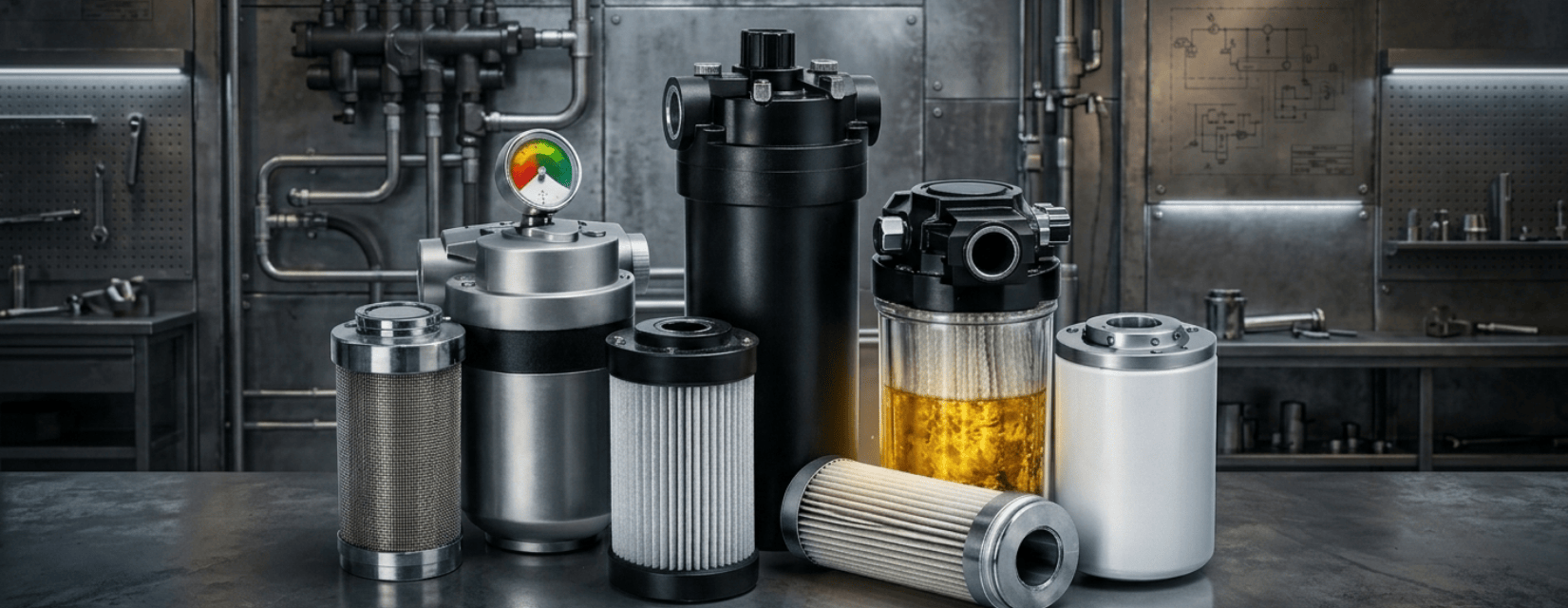
What Are Hydraulic Filters?
Hydraulic filters are critical filtration components that protect system elements by capturing solid particles, metal wear debris, dust, and other contaminants present in the oil circulating within hydraulic systems. Since hydraulic systems contain high-precision components such as pumps, valves, cylinders, and motors, oil cleanliness is vital for system performance and equipment lifespan.
In terms of operating principle, hydraulic filters reduce contamination by passing the fluid through filter media at a specific micron rating. This helps maintain oil flow stability, reduce wear, and prevent system failures. Especially in mobile machinery, production lines, and heavy industrial equipment operating under high pressure, filtration quality directly affects operational efficiency.
Modern hydraulic filters are designed using cellulose, synthetic fiber, or multi-layer composite filter media to provide high dirt holding capacity and low pressure drop. A properly selected hydraulic filter extends oil service life, reduces maintenance costs, and improves system reliability.
Application Areas
Construction and heavy equipment
Ensures safe operation of hydraulic systems under high pressure in heavy-duty machinery such as excavators, loaders, dozers, and cranes.
Agricultural and farming equipment
Protects system components against wear in tractors, harvesters, and agricultural machinery using hydraulic attachments.
Industrial production facilities
Supports production continuity by ensuring fluid cleanliness in press machines, injection systems, and hydraulic power units.
Mining and field operations
Extends the service life of hydraulic equipment in mining environments with heavy dust and harsh conditions.
Energy and power generation systems
Contributes to system stability in turbines and energy equipment with hydraulic control mechanisms.
Marine and maritime applications
Provides reliable operating conditions in onboard equipment and hydraulic systems.
Logistics and lifting equipment
Supports precise motion control in forklifts, stacking machines, and hydraulic lifting platforms.
Key Considerations for Selecting the Right Hydraulic Filter
System pressure rating and flow capacity
The filter must match the operating pressure and flow rate of the hydraulic system. Incorrect capacity selection may lead to filter damage or performance loss.
Filtration efficiency (micron rating)
The particle retention level should be determined according to system sensitivity. Lower micron-rated filters are preferred for high-precision valve and servo systems.
Filter placement type
Selecting the appropriate type such as suction line, pressure line, or return line filters is important for system efficiency.
Dirt holding capacity and service life
Filters with high dirt holding capacity and long service life reduce maintenance costs and support operational continuity.
Pressure drop and flow resistance
Resistance created by the filter element may affect system performance. Filters with low pressure drop should be preferred.
Sealing and installation compatibility
Full compatibility of housing dimensions and connection types reduces the risk of bypass and leakage.
Operating conditions
External factors such as high temperature, vibration, humidity, and dust may directly affect filter selection.
Compliance with OEM technical standards and product quality
Filters produced by manufacturers that meet international quality standards ensure more stable system performance and reliability.
The Importance of Oil Cleanliness in Hydraulic Systems
Oil contamination is one of the most common causes of hydraulic system failures. Metal particles, water, and air bubbles can cause serious damage to sensitive components such as pumps, valves, and cylinders. Regular oil analysis to monitor contamination levels is a fundamental part of any preventive maintenance strategy.
Using high-quality hydraulic filters extends oil life and significantly increases the service life of system components. Kaya Group’s hydraulic filter range is designed and tested in accordance with ISO 4406 contamination standards, ensuring reliable protection for your hydraulic system.
Selecting the Right Hydraulic Filter
Correct hydraulic filter selection should be based on the system’s operating pressure, oil viscosity, flow rate, and target cleanliness class requirements. The ISO 4406 standard provides the key reference point for determining the required filtration level. Argo-Hytos, Filtrec, and Parker offer a wide range of hydraulic filters suitable for different system requirements. Contact Kaya Group’s technical team for expert support in identifying the right hydraulic filter for your application.
Our Solution Partners
We provide reliable hydraulic filtration solutions tailored to different operating conditions by collaborating with manufacturers that meet global quality standards in industrial filtration.







You can visit our online sales platform to explore hydraulic filtration products suitable for your equipment and view stock availability.
Stay Informed: Hydraulic Filtration Insights
Hydraulic system reliability is directly linked to correct filter selection and regular maintenance. Visit our blog for hydraulic filter selection criteria, oil analysis guidance, and maintenance planning tips for industrial and mobile equipment.
Contact Information
Ostim, 1142. Sk. No:1/1, 06374
Ostim OSB – Yenimahalle / Ankara